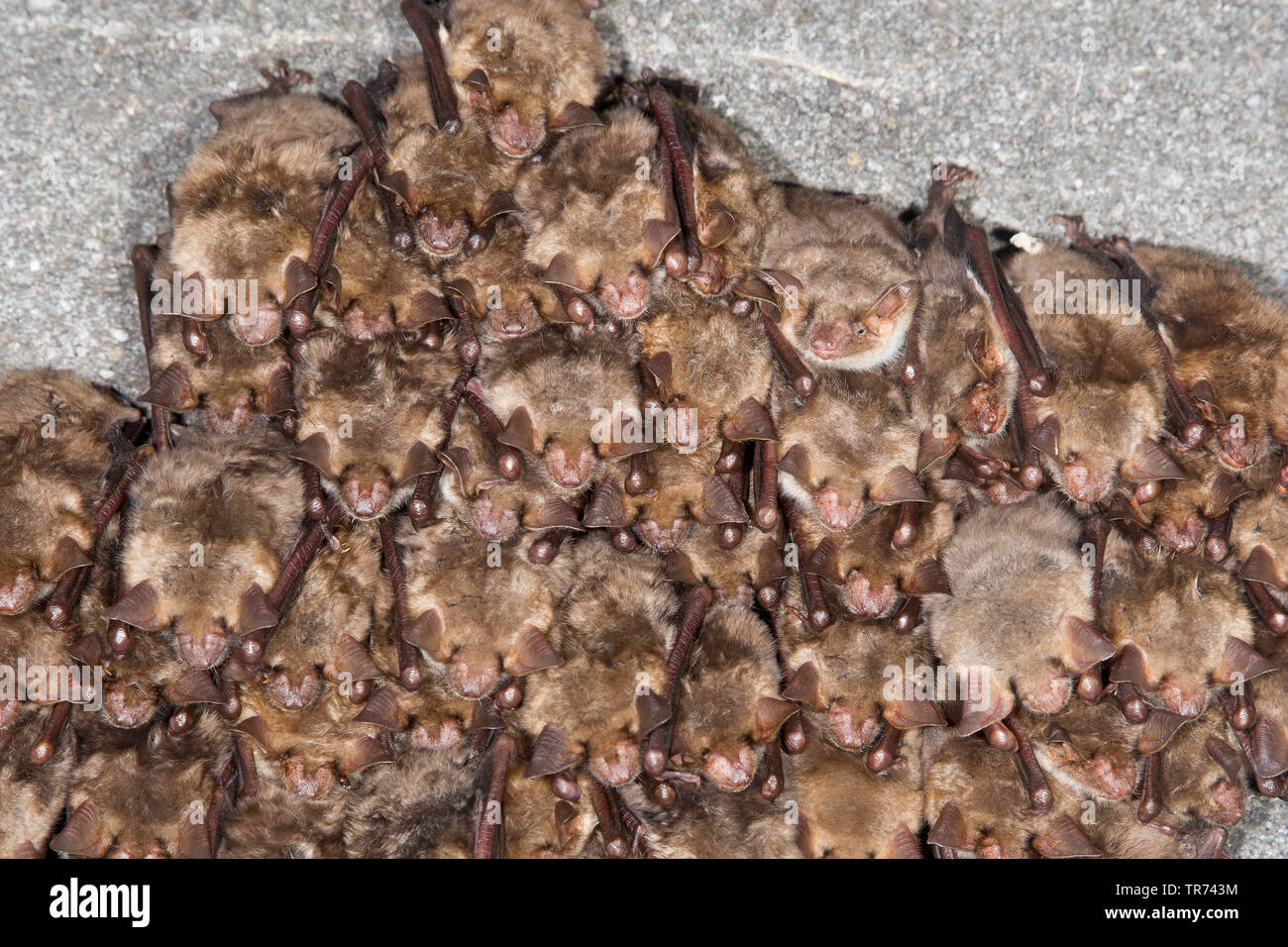
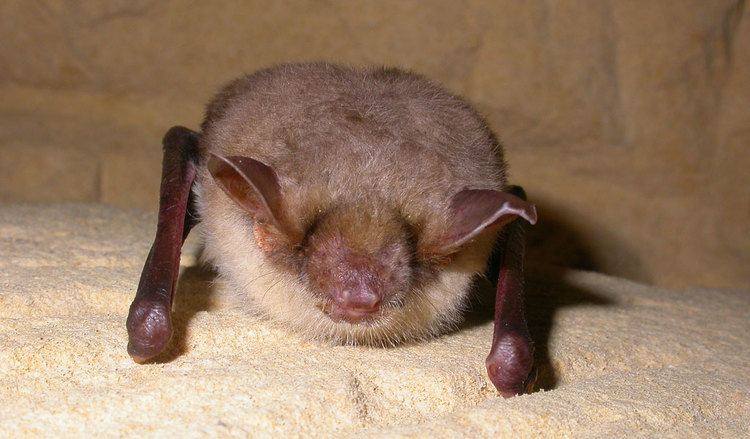
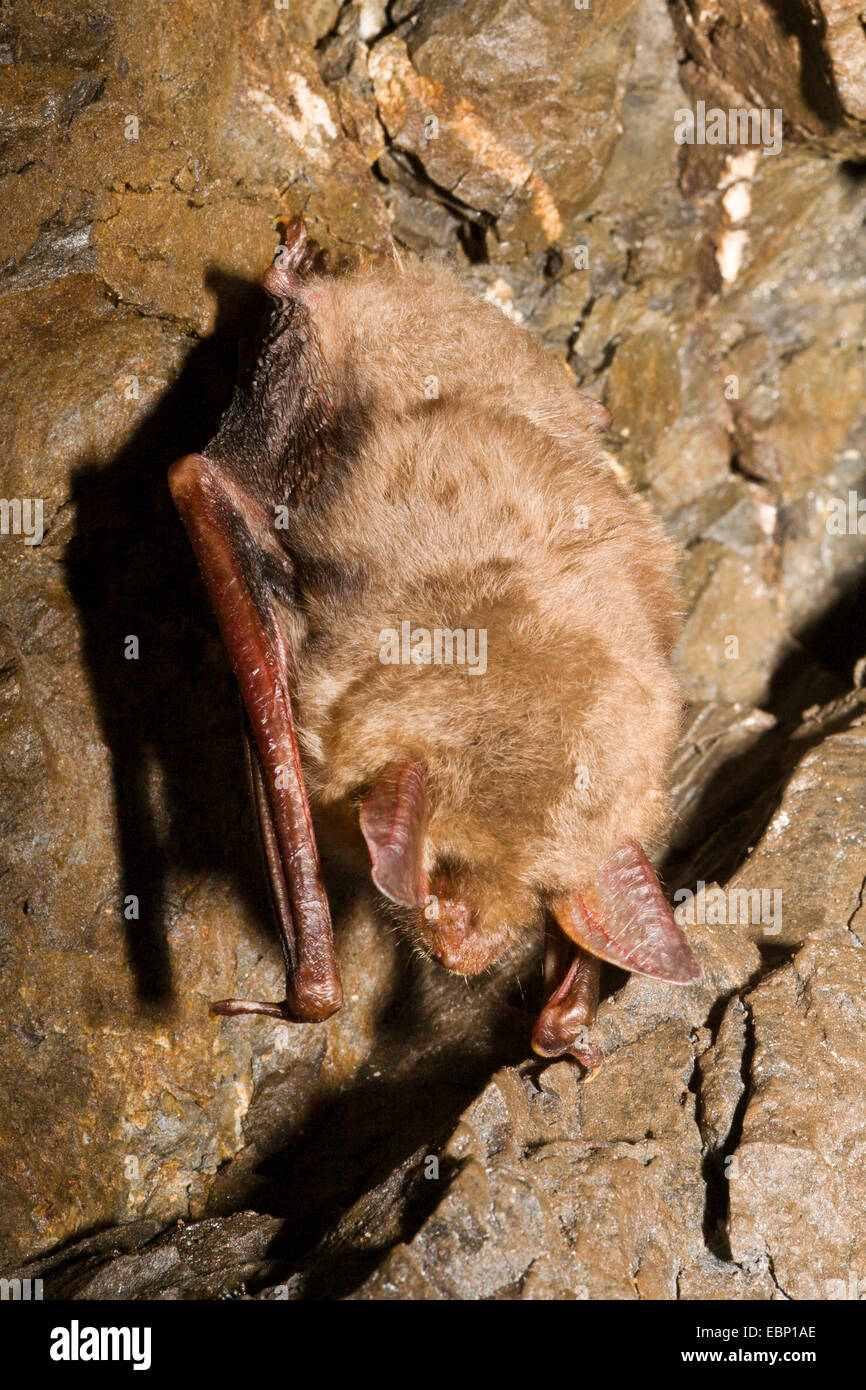
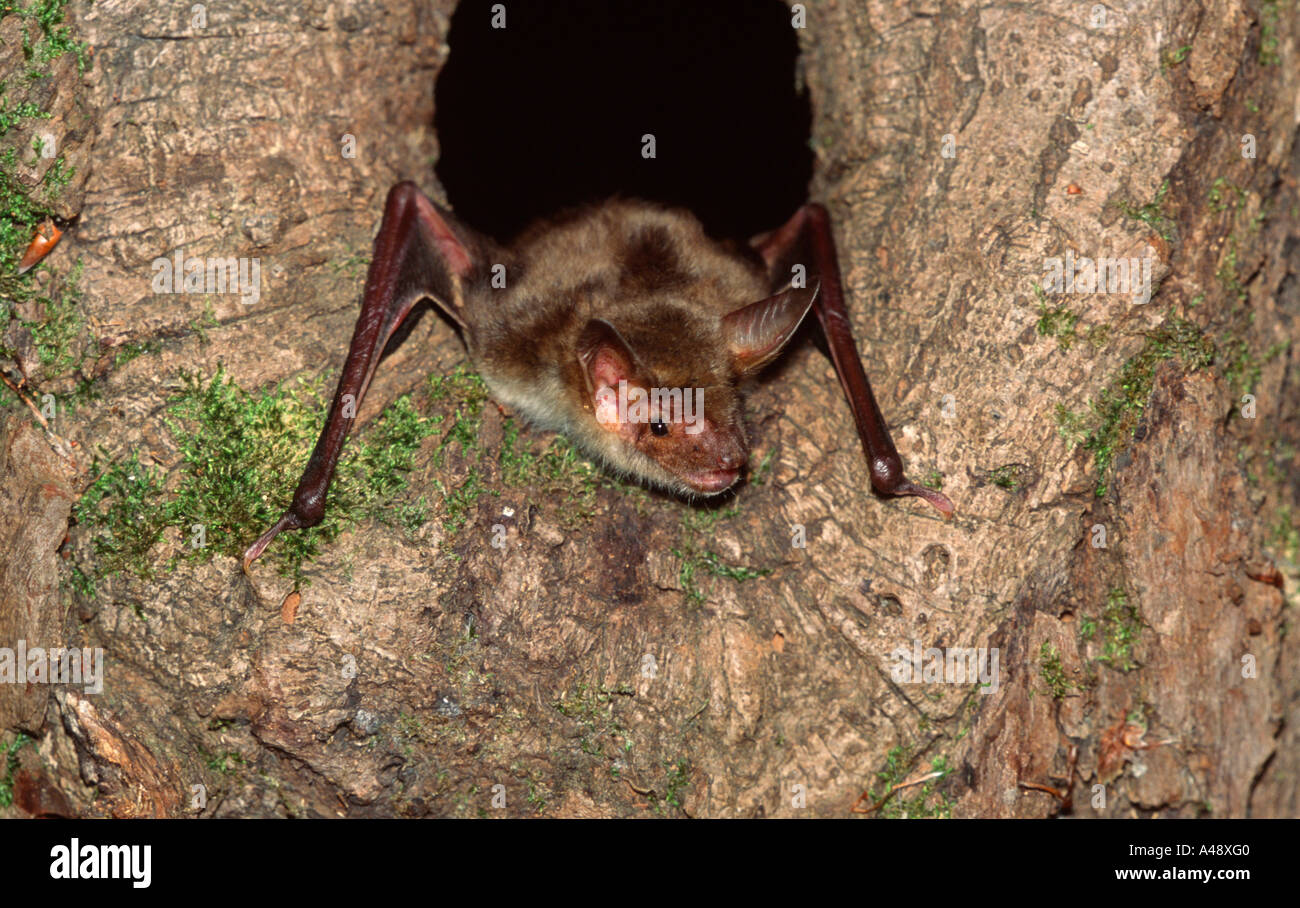
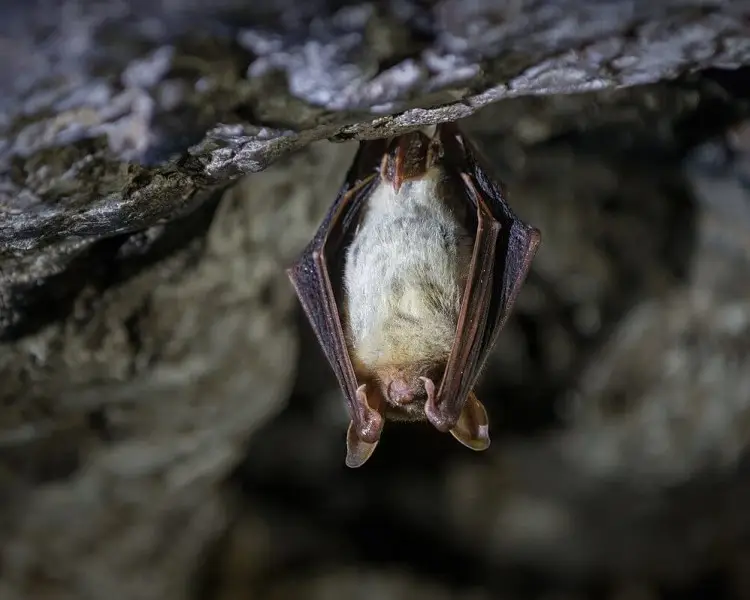
The mouse-eared bats or myotises are a diverse and widespread genus (Myotis) of bats within the family Vespertilionidae. The noun "myotis" itself is a Neo-Latin construction, from the Greek "muós (meaning "mouse") and "oûs" (meaning ear), literally translating to "mouse-eared".
Relationships
Myotis has historically been included in the subfamily Vespertilioninae, but was classified in its own subfamily, Myotinae, by Nancy Simmons in 1998. In her 2005 classification in Mammal Species of the World, Simmons listed the genera Cistugo and Lasionycteris in the Myotinae in addition to Myotis itself. However, molecular data indicate that Cistugo is distantly related to all other Vespertilionidae, so it was reclassified into its own family, the Cistugidae, and that Lasionycteris belongs in the Vespertilioninae. The genus Submyotodon has since been added to the subfamily, making it and Myotis its only members.
Appearance and behavior
Their ears are normally longer than they are wide, with a long and lance-shaped tragus, hence their English and zoological names. The species within this genus vary in size from very large to very small for vesper bats, with a single pair of mammary glands.
Mouse-eared bats are generally insectivores. M. vivesi, and several members of the trawling bat ecomorph Leuconoe, have relatively large feet with long toes, and take small fish from the water surface (they also take insects).
Longevity
Myotis species are remarkably long-lived for their size; in 2018, researchers revealed that a longitudinal study appears to indicate that Myotis telomeres do not shrink with age, and that telomerase does not appear to be present in the Myotis metabolism. 13 species of Myotis bats live longer than 20 years and 4 species live longer than 30 years. The longest-living species of Myotis, and longest-living bat in general, is thought to be the Siberian bat (M. sibiricus); one individual discovered in 2005 was found to be over 41 years old at the time.
Species
Traditionally, Myotis was divided into three large subgenera—Leuconoe, Myotis, and Selysius. However, molecular data indicate that these subgenera are not natural groups, but instead unnatural assemblages of convergently similar species. Instead, Myotis species largely fall in two main clades, one containing Old World and the other New World species. The ITIS presently divides it into three subgenera: Chrysopteron (containing most reddish-colored Old World species), Myotis (containing almost all other Old World species), and Pizonyx (containing all New World species and the Eurasian Myotis brandtii and Myotis sibiricus, which are more closely related to New World species than to other Old World species). The Asian species Myotis latirostris falls outside the clade formed by these main groups, and has since been reclassified into a separate genus, Submyotodon, alongside several others.
Myotis is a highly species-rich genus, and the classification of many species remains unsettled. The taxonomy below is based on that of the ITIS in 2021. Some differences in taxonomy from the 2005 third edition of Mammal Species of the World are indicated in footnotes.
See also
- Bat adenovirus TJM
Notes
References
Literature cited
- Borisenko, A.V., Kruskop, S.V. and Ivanova, N.V. 2008. A new mouse-eared bat (Mammalia: Chiroptera: Vespertilionidae) from Vietnam. Russian Journal of Theriology 7(2):57–69.
- Han, N., Zhang, J., Reardon, T., Lin, L., Zhang, J. and Zhang, S. 2010. Revalidation of Myotis taiwanensis Ärnbäck-Christie-Linde 1908 and its molecular relationship with M. adversus (Horsfield 1824) (Vespertilionidae, Chiroptera) (subscription required). Acta Chiropterologica 12(2):449–456.*Happold, M. 2005. A new species of Myotis (Chiroptera: Vespertilionidae) from central Africa. Acta Chiropterologica 7(1):9–21.
- Ibáñez, C., García-Mudarra, J.L., Ruedi, M., Stadelmann, B. and Juste, J. 2006. The Iberian contribution to cryptic diversity in European bats. Acta Chiropterologica 8(2):277–297.
- Jiang, T., Sun, K., Chou, C., Zhang, Z. and Feng, J. 2010. First record of Myotis flavus (Chiroptera: Vespertilionidae) from mainland China and a reassessment of its taxonomic status. Zootaxa 2414:41–51.
- Lack, J.B., Roehrs, Z.P., Stanley, C.E., Ruedi, M. and Van Den Bussche, R.A. 2010. Molecular phylogenetics of Myotis indicate familial-level divergence for the genus Cistugo (Chiroptera) (subscription required). Journal of Mammalogy 91(4):976–992.
- Matveev, V.A., Kruskop, S.V. and Kramerov, D.A. 2005. Revalidation of Myotis petax Hollister, 1912 and its new status in connection with M. daubentonii (Kuhl, 1817) (Vespertilionidae, Chiroptera). Acta Chiropterologica 7(1):23–37.
- Mayer, F., Dietz, C. and Kiefer, A. 2007. Molecular species identification boosts bat diversity. Frontiers in Zoology 4(1):239–255.
- Moratelli, R.; Wilson, D. E.; Novaes, R. L. M.; Helgen, K. M.; Gutiérrez, E. E. (2017-06-07). "Caribbean Myotis (Chiroptera, Vespertilionidae), with description of a new species from Trinidad and Tobago". Journal of Mammalogy. 98 (4): 994–1008. doi:10.1093/jmammal/gyx062.994-1008&rft.date=2017-06-07&rft_id=info:doi/10.1093/jmammal/gyx062&rft.aulast=Moratelli&rft.aufirst=R.&rft.au=Wilson, D. E.&rft.au=Novaes, R. L. M.&rft.au=Helgen, K. M.&rft.au=Gutiérrez, E. E.&rft_id=https://doi.org/10.1093%2Fjmammal%2Fgyx062&rfr_id=info:sid/en.wikipedia.org:Mouse-eared bat">
- Roehrs, Z.P., Lack, J.B. and Van Den Bussche, R.A. 2010. Tribal phylogenetic relationships within Vespertilioninae (Chiroptera: Vespertilionidae) based on mitochondrial and nuclear sequence data (subscription required). Journal of Mammalogy 91(5):1073–1092.
- Simmons, N.B. 2005. Order Chiroptera. Pp. 312–529 in Wilson, D.E. and Reeder, D.M. (eds.). Mammal Species of the World: A Taxonomic and Geographic Reference. 3rd ed. Baltimore: The Johns Hopkins University Press, 2 vols., 2142 pp. ISBN 978-0-8018-8221-0
- Stadelmann, B., Lin, L.-K., Kunz, T.H. and Ruedi, M. 2007. Molecular phylogeny of New World Myotis (Chiroptera, Vespertilionidae) inferred from mitochondrial and nuclear DNA genes (subscription required). Molecular Phylogenetics and Evolution 43(1):32–48.
- Tsytsulina, K. 2004. On the taxonomical status of Myotis abei Yoshikura, 1944 (Chiroptera, Vespertilionidae). Zoological Science 21:963–966.
- Simmons, Nancy B.; Flanders, J.; Bakwo Fils, E. M.; Parker, Guy; Suter, Jamison D.; Bamba, Seinan; Keita, Mamady Kobele; Morales, Ariadna E.; Frick, Winifred F. 2021. A new dichromatic species of Myotis (Chiroptera: Vespertilionidae) from the Nimba Mountains, Guinea (American Museum novitates, no. 3963) American Museum Novitates. ISSN 0003-0082.
External links
- Myotis at Animal Diversity Web